







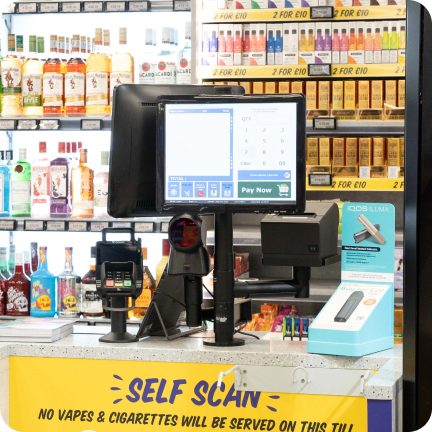
Self-checkout is no longer something only large supermarkets can justify. Smaller retailers are increasingly looking at self-service to reduce queues, improve customer flow and make better use of staff time. The challenge is choosing a system that genuinely suits the size, layout and trading style of your shop. A setup that works brilliantly in a larger grocery environment can be the wrong fit for a compact convenience store, a specialist shop or a local independent. Pan Oston, for example, explicitly markets slim self-checkout formats for smaller-footprint stores such as convenience stores, bookshops and post offices, which shows how far the category has moved beyond big-box retail.
That shift matters because the buying decision is no longer just about adding a modern-looking machine near the exit. A self-checkout system affects store layout, queue management, payments, staff intervention, reporting and EPOS integration. MHouse’s own self-service positioning reflects that broader role, describing MPOS Self-Service kiosks as tools that let customers scan, pay and complete purchases independently while reducing queues, improving satisfaction and supporting store efficiency.
If you are considering self-checkout for a small retail store, the best approach is not to start with the flashiest kiosk or the cheapest quote. Start by asking whether the system fits the way your shop actually trades.
Is a self-checkout system right for a small shop?
In many cases, yes. But not automatically.
Self-checkout tends to make the most sense when a shop has regular queue pressure, a fair number of smaller baskets, strong card and contactless usage, and enough floor space to add a self-service point without creating congestion. It can also work well when the owner wants staff to spend less time tied to the till and more time helping customers, replenishing stock or handling store standards. Pan Oston’s product positioning around small-footprint self-checkouts for convenience stores, bookshops and post offices is a useful reminder that compact formats now exist specifically for these kinds of environments.
That said, self-checkout is not a universal fix. If your average basket is large, your product mix is complex, your layout is cramped, or your customers need regular one-to-one help at the point of sale, a poorly chosen system can create more friction than value. The aim is not simply to install self-service. It is to improve the flow of the shop.
Why small retailers are looking at self-checkout
The commercial reasons are fairly straightforward. Small retailers want to serve customers faster, avoid long queues at peak times, modernise the checkout experience and make better use of staff. Those pressures are particularly strong in convenience-led environments where many customers want a quick in-and-out visit rather than a long browse.
Pan Oston states that long queues push customers away and that self-checkouts help shorten queues and maintain better customer flow. Trust Retail makes a similar case, saying self-checkout reduces queues and wait times while offering speed and convenience in store.
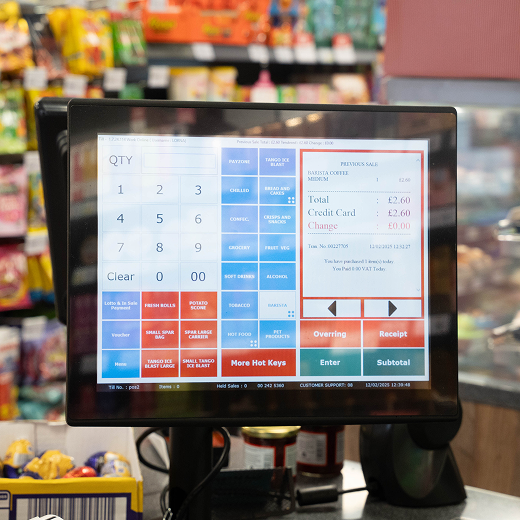
MHouse makes the same operational argument in its own self-service content, highlighting reduced queues, faster independent checkouts, improved satisfaction and better efficiency for retailers. It also positions MPOS Self-Service as more than a payment point, pointing to analytics, loyalty integration, restricted-product handling and secure payment options.
So the appeal is not difficult to understand. The real question is how to choose a system that delivers these benefits without introducing new problems.
Start with the way your shop trades
Before comparing self-checkout suppliers, look closely at your own store.
A small convenience store with many grab-and-go purchases has different needs from a gift shop with slower, more considered baskets. An off licence may need strong age-restriction handling. A bookshop may care more about compact footprint and calm usability. A petrol and convenience environment may prioritise speed and card-led payments.
This is why the best buying guide always starts with trading reality rather than product brochures. You need to consider your busiest periods, average basket size, customer behaviour, payment habits and available floor space. A self-checkout system is only a good investment if it fits the way customers already move through the shop or the way you want them to.
Consider the main types of self-checkout system
Not every self-checkout setup looks the same.
Some stores suit a compact freestanding kiosk. Others benefit from a slimmer self-checkout format designed specifically for smaller retail footprints. Pan Oston’s SLIM SCO and SLIM Express are positioned precisely this way, aimed at shops with smaller footprints such as convenience stores, bookshops and post offices.
Other environments may suit a more integrated self-service arrangement or a countertop-style format. Some retailers prefer cashless self-checkout because it reduces hardware complexity and aligns with how many smaller purchases are already made. Others need a fuller setup with attendant support, stronger intervention tools and more flexibility around basket handling.
The point is not to memorise every product category. It is to recognise that footprint, payment method and intervention level all matter. If your supplier cannot explain which format suits your store type and why, that is usually a warning sign.
Ease of use should come before novelty
One of the biggest mistakes retailers make is choosing a system that looks modern but is awkward in real use.
A strong self-checkout experience should feel simple from the customer’s point of view. Scanning should be clear. The on-screen journey should make sense. Payment should be quick. If staff need to step in constantly because the interface is confusing, the supposed labour saving disappears.
Trust Retail emphasises an intuitive interface, quick product identification and smooth customer flow, while MHouse describes its MPOS Self-Service interface as secure, intuitive and designed to make checkout effortless.
For a small shop, this matters even more than in a larger one. You may only have one self-checkout point. If that one point creates confusion, it is highly visible and directly affects queue flow. A good system should shorten friction, not move it from a staffed till to an unattended screen.
Think carefully about store footprint
Space is one of the biggest practical issues for small retailers.
A self-checkout unit might sound attractive in theory, but if it blocks circulation, creates bottlenecks near the entrance, or eats into merchandising space, it may do more harm than good. Pan Oston repeatedly highlights reduced footprint and small-store suitability in its self-checkout range, while Trust Retail says its self-checkout machine is designed in slimline portrait mode to maximise space and improve layout.
This is why store-fit should be one of the first evaluation points. Ask yourself where the kiosk would sit, how customers would approach it, whether it would interfere with queue formation, and whether one compact unit is enough or whether the space would be better used differently.
In a small shop, a system that is physically elegant is not just a design extra. It is part of the commercial logic.
Match the system to your basket size
Self-checkout usually works best when customers have smaller, simpler baskets and want to move quickly. That makes it a natural fit for many convenience stores, local food shops and other fast-visit retail environments.
Where baskets are larger, more mixed or more likely to require staff help, the decision becomes more nuanced. A system may still work, but the need for attendant support, product lookup, age verification or troubleshooting rises. This is why some providers promote attendant mode and intervention tools as core features. Trust Retail, for example, highlights attendant mode with remote alert-clearing and analytics that help measure speed and interventions.
The lesson is simple: do not buy self-checkout on trend alone. Buy it for the basket profile you actually have.
Payment options matter more than many shops realise
Customers expect self-checkout to be fast, and payments are a big part of that expectation.
For many small shops, cashless self-checkout makes the most sense because it keeps the hardware simpler and aligns with card and contactless-heavy behaviour. But even within cashless setups, you still need to check which payment methods are supported and how smoothly the payment step works.
Trust Retail says its self-checkout supports credit cards, debit, mobile and a broad range of alternative payment types, while MHouse highlights integrated chip and PIN, card payment processing and secure payment options within MPOS Self-Service.
When comparing systems, do not just ask whether the kiosk “takes card”. Ask how quickly the payment step works, whether the reader is integrated cleanly, whether mobile wallets are supported, and whether the checkout flow remains smooth at busy times.
EPOS integration is one of the most important buying criteria
A self-checkout system should not be treated as a standalone gadget if you want proper control over the store.
Integration with EPOS matters because it affects sales data, promotions, stock visibility, pricing consistency and reporting. Trust Retail says its self-checkout system is fully integrated with ePOS and also offers APIs to integrate with existing technology. MHouse’s self-service content positions MPOS Self-Service within a wider retail operating environment, mentioning real-time analytics, loyalty integration and broader store optimisation.
This matters in practice. If your self-checkout does not communicate cleanly with your EPOS environment, you may end up creating more manual admin instead of less. Promotions may not flow properly. Sales reporting may become fragmented. Stock may be harder to reconcile. For a small retailer, that kind of operational friction can wipe out the value of the kiosk itself.
So when comparing options, one of the most important questions is not just “How much does it cost?” but “How well does it fit my wider system?”
Staff intervention is normal, so plan for it
One of the myths around self-checkout is that it removes the need for staff involvement altogether. In reality, even a good system needs some level of support.
There will be age-restricted products, scan issues, customer uncertainty or occasional payment hiccups. The aim is not zero intervention. The aim is manageable intervention. Trust Retail’s emphasis on attendant mode, remote alert-clearing and analytics around interventions shows how seriously this part of the workflow is taken in better self-checkout systems.
MHouse also points to restricted-product management as a built-in MPOS Self-Service capability.
For a small shop, this means the right self-checkout should help staff step in quickly and efficiently when needed, rather than forcing them into a slow or clumsy override process.
Reporting and analytics are not just “nice to have”
Small retailers sometimes focus so heavily on the physical kiosk that they forget to assess the back-office side.
But reporting matters because it tells you whether the system is actually improving operations.
- Can you see transaction speed?
- Can you understand when interventions happen most often?
- Can you measure usage patterns?
- Can you spot whether self-checkout is easing queues or simply moving congestion elsewhere?
Trust Retail explicitly highlights dashboard analytics that measure speed and interventions, while MHouse says MPOS Self-Service gives access to real-time analytics and customer data insights for smarter decision-making.
For a small store owner, these insights matter because they turn self-checkout from a shiny fixture into a manageable part of store performance.
Do not overlook support and offline capability
Retail systems do not always fail at convenient times. If a shop is relying on a self-checkout point during a busy period, downtime becomes a real trading issue.
That is why support and resilience should form part of the buying decision. Trust Retail highlights offline mode and 24/7 support, saying transactions can continue when internet connections are lost.
You do not necessarily need every support feature on the market, but you do need to understand what happens when something goes wrong. Ask how faults are handled, whether the system has offline capability, what support hours are included, and how quickly a problem can realistically be resolved.
For a small shop, reliability often matters more than long feature lists.
How to assess self-checkout by shop type
The right choice often becomes clearer when you look at your own sector.
For a convenience store, self-checkout is often most attractive when basket sizes are smaller, contactless use is high and peak-time queue pressure is frequent. This is one reason so many compact self-checkout products are marketed specifically at convenience and petrol-convenience environments. Pan Oston’s small-footprint SLIM range is a clear example.
For an off licence or specialist food retailer, the key question is often whether the system handles age-restricted items and intervention smoothly enough to support fast service without constant friction.
For bookshops, gift shops or post office-style retail environments, the appeal often centres on footprint, customer convenience and modernisation of the checkout experience rather than pure transaction volume.
Different shop types can all benefit from self-checkout, but the reasons are not always the same. That is why buying guides that treat every retailer the same are rarely very helpful.
Common mistakes small retailers make when choosing self-checkout
One of the most common mistakes is focusing only on hardware price. A cheaper unit may turn out to be a poorer fit if it lacks strong EPOS integration, creates too much staff intervention or takes up the wrong kind of space.
Another mistake is ignoring store layout. In a small shop, placement matters enormously. A self-checkout that disrupts customer movement or blocks merchandising space may look good on a proposal but work badly in reality.
A third mistake is underestimating the need for staff support. Self-service is not staff-free. It is staff-different. A well-designed system helps one team member support multiple customer journeys efficiently. A badly designed one simply creates repeated interruptions.
Retailers also make mistakes when they treat self-checkout as separate from the rest of the store technology stack. If it does not integrate cleanly with payments, EPOS, reporting and promotional logic, the result is usually more admin rather than less.
What a good self-checkout experience looks like
A good self-checkout experience feels obvious to the customer.
The shopper approaches the kiosk without confusion, scans items easily, understands what to do next, pays quickly and leaves without delay. The store team can help when needed, but intervention is occasional rather than constant. The kiosk fits naturally into the space. It shortens queues rather than creating a new waiting point. It supports the store’s rhythm instead of fighting it.
That kind of experience is exactly what better self-checkout suppliers describe. Trust Retail focuses on fast, seamless checkouts, reduced queues and slimline layout, while MHouse talks about quick, intuitive self-managed checkouts that reduce wait times and improve satisfaction.
In other words, good self-checkout is not just about automation. It is about flow.
When MPOS Self-Service Kiosks by MHouse make sense
After looking at the neutral buying criteria, it is clear where MHouse fits.
MPOS Self-Service Kiosks by MHouse make the most sense for retailers who want a modern, integrated self-service option that is focused on speed, independence and operational efficiency. MHouse states that its kiosks allow customers to scan, pay and complete purchases on their own, reduce queues, improve satisfaction, support loyalty integration and offer real-time analytics. It also highlights restricted-product management, secure payment options, product navigation and round-the-clock availability.
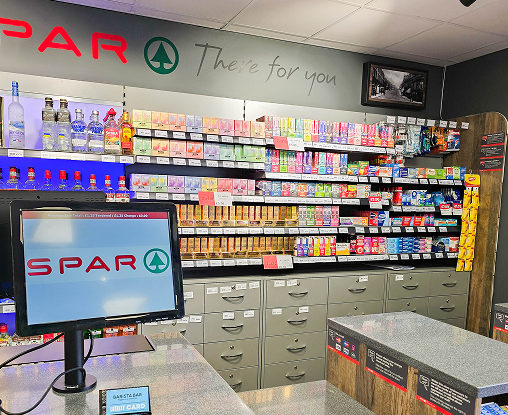
That makes MHouse a particularly natural option for convenience-led environments and other small retail stores that want more than a basic payment screen. If your priority is to improve checkout flow while keeping the system connected to a wider retail platform, MPOS Self-Service Kiosks are a strong fit to consider.
The key is that the recommendation works best after the objective questions have been answered. If your shop needs a solution that is intuitive, payment-ready, operationally useful and aligned with a broader EPOS strategy, then MHouse deserves to be on the shortlist.
Final thoughts
The best self-checkout system for a small retail store is not simply the cheapest machine or the most impressive-looking kiosk. It is the one that fits your footprint, basket profile, staffing model, payment habits and wider EPOS environment.
For some shops, the right answer will be a compact, cashless self-checkout that handles fast small baskets with minimal fuss. For others, it will be a more integrated format with stronger attendant tools, analytics and stock visibility. The important thing is to choose based on how your shop actually works, not on generic assumptions about what self-service should look like.
That is also why MPOS Self-Service Kiosks by MHouse are worth serious consideration. MHouse’s own product positioning lines up well with what smaller retailers tend to need most: fast and intuitive checkout, queue reduction, secure payments, restricted-product support, analytics and a wider operational fit.
Choose the system that supports the store, not the system that simply fills a space.
FAQs
Is self-checkout worth it for a small shop?
It can be, especially if your shop has regular queue pressure, smaller basket sizes and strong card or contactless use. Compact self-checkout formats are now marketed specifically for smaller-footprint stores such as convenience stores, bookshops and post offices.
Does self-checkout need to connect to EPOS?
In most cases, yes. Good EPOS integration helps keep sales, payments, stock, promotions and reporting aligned. Trust Retail and MHouse both position self-checkout as part of a broader connected retail setup.
What features matter most in a small-store self-checkout?
Ease of use, small footprint, smooth payments, staff intervention tools, analytics, support and clean EPOS integration are usually the most important.
Can self-checkout work in a convenience store?
Yes. Convenience stores are one of the clearer use cases because many customers have small baskets and want fast service. Pan Oston explicitly markets slim self-checkout solutions for convenience and petrol-convenience environments.
Why would a retailer choose MPOS Self-Service Kiosks by MHouse?
Because MHouse positions them around faster independent checkout, reduced queues, secure payments, loyalty integration, restricted-product support and real-time analytics, which are all relevant to small retail operations.