









Retail theft is no longer something convenience stores can treat as an occasional nuisance. For many shops, it has become a regular pressure on profit, staff confidence and day-to-day operations. What used to be the odd missing item can now look more like repeated shoplifting, refund abuse, suspicious till activity, and stock discrepancies that are difficult to explain.
The wider UK picture shows why this topic matters so much. The British Retail Consortium said retail crime reached record levels, with customer theft costing retailers £2.2 billion in 2023/24 and total retail crime costs, including prevention, reaching £4.2 billion. The same reporting said violence and abuse rose to more than 2,000 incidents a day.
For convenience stores, the problem is often worse than the headline numbers suggest. These shops deal with fast transactions, lean staffing, regular peak periods, and a product mix that often includes easy-to-conceal and easy-to-resell items. That makes loss prevention more difficult if the store relies on manual checks, inconsistent till controls, or limited reporting.
This is where EPOS can make a real difference. A modern EPOS system is not just there to process sales. It can also help convenience stores create stronger controls, improve visibility, track suspicious behaviour, tighten refund handling, and spot stock loss earlier. MHouse’s own content already reflects this position, highlighting AI-powered MPOS tools to detect suspicious activity and reduce losses.
Why theft hits convenience stores so hard
Convenience stores operate in an environment where speed matters. Customers want to get in and out quickly, staff are often serving at pace, and one busy period can create the perfect window for theft, distraction tactics or till abuse. That alone does not cause loss, but it does make weak systems far more expensive. A store that cannot clearly see what is happening at the till, in stock, and across staff activity will always struggle to tackle repeated loss properly.
There is also the issue of frequency. Not every incident involves a dramatic robbery or a large-value theft. In reality, many stores lose money through smaller repeated incidents: a few stolen items here, a suspicious refund there, a product mismatch during stock checks, or unauthorised discounts that go unnoticed. Over time, these losses quietly erode margin and can become normalised if nobody has the tools to track them.
The BRC has linked rising theft not only to higher financial losses but also to organised gangs targeting stores repeatedly, sometimes hitting multiple locations in a single day. That matters for independent retailers because it means theft is not always random. In some cases, stores are being targeted systematically.
Convenience-store loss is not just shoplifting
When retailers think about theft prevention, they often picture shoplifting first. That is understandable, but it is only one part of the problem.
A convenience store can lose money through:
- opportunistic shoplifting
- organised retail crime
- refund abuse
- staff theft
- void abuse
- unrecorded discounts
- stock receiving errors
- administrative mistakes
- wastage that is not logged properly
That broader category is often described as shrinkage. In simple terms, shrinkage is the loss of stock or profit caused by theft, fraud, error, damage or weak controls. If a store only focuses on visible shoplifting, it may miss the losses happening behind the till or in the back office.
This matters because a shop can think it has “a theft problem” when the real issue is a mix of theft and poor control. That is why EPOS matters so much. A strong EPOS system does not only record sales. It helps separate genuine theft from preventable errors.
How EPOS helps reduce theft in convenience stores
The most important thing EPOS gives a retailer is visibility.
Without clear data, stores are left relying on instinct. Managers may suspect certain times of day, certain product lines, or even certain staff members, but suspicion alone does not solve anything. EPOS creates a record of what happened, when it happened, who processed it, and whether it fits a normal trading pattern.
That has real value in a busy shop because it allows the business to move from guesswork to evidence.
Better transaction visibility
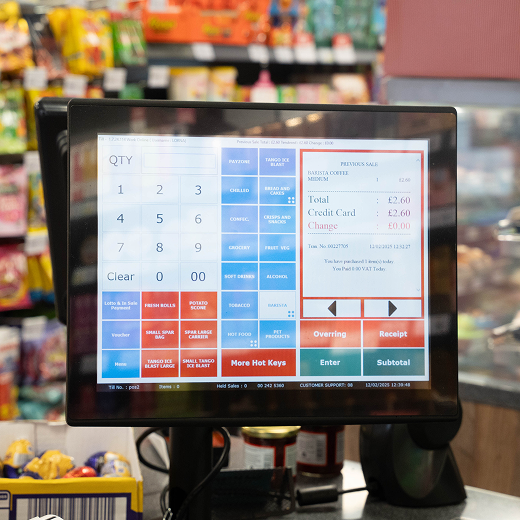
Every sale, void, refund and discount goes through the till. That means EPOS can create a clear transaction trail that is much harder to hide than activity in a basic or loosely controlled setup.
If a store experiences repeated suspicious refunds, excessive discounts, or unusual no-sale drawer openings, those events can be reviewed against user activity and trading times. That does not automatically prove theft, but it makes patterns easier to investigate.
Staff logins and accountability
One of the simplest but most valuable controls in EPOS is individual staff access.
When each staff member uses their own login or permission level, the store gains accountability. If every operator shares one till identity, it becomes far harder to trace unusual activity. But if refunds, discounts, voids and overrides are linked to specific users, management can review performance and exceptions much more fairly and accurately.
This is one of the most overlooked ways EPOS helps reduce loss. Staff theft and misuse often depend on weak accountability. Strong user controls make that harder.
Audit trails for refunds, voids and discounts
Refund abuse is a serious issue in retail because it can be less visible than shoplifting. A false refund may not look dramatic, but over time it can cause a significant loss, especially if store controls are weak.
EPOS helps by creating audit trails around:
- who processed the refund
- when it happened
- what item was involved
- whether a manager approved it
- how often similar refunds are taking place
The same applies to voids and discounts. If one staff member is consistently producing unusually high levels of voided sales or manual discounts, the store has something concrete to review instead of relying on guesswork.
Stock movement tracking
A convenience store cannot manage loss properly if it does not understand stock movement.
EPOS improves this by helping the retailer compare:
- what was sold
- what should remain
- what was received
- what has gone missing
- which product lines show repeated variance
This is especially useful for high-risk categories such as alcohol, vaping products, confectionery, batteries, over-the-counter medicines, and other items that are easy to conceal or resell.
When stock loss is mapped clearly by product line, time period or store area, the retailer can start solving the right problem instead of reacting blindly.
Faster incident review
One of the most practical benefits of EPOS is how quickly it can support incident review.
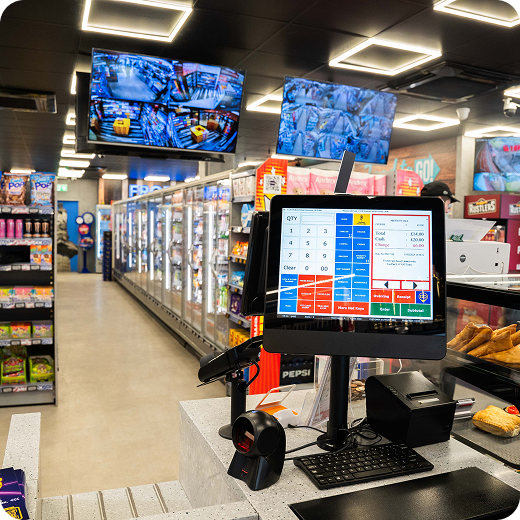
If a suspicious event happens at a particular time, the store can cross-check till activity, user logs and timestamps against CCTV footage. That can make investigations far quicker and more accurate. Instead of reviewing hours of footage without context, the manager can start from the transaction record and work outwards.
MHouse already positions this kind of control-focused approach as part of smarter retail security, linking AI-led MPOS tools with suspicious activity detection and store protection.
How EPOS helps reduce refund abuse
Refund abuse deserves special attention because it often looks like a policy issue when it is actually a systems issue.
A weak refund process can create opportunities for:
- false customer claims
- returns without proof of purchase
- duplicate refunds
- staff collusion
- fake or manipulated receipt use
- refunds processed outside policy
EPOS helps reduce these risks by making refund workflows more controlled and more visible.
For example, a store can use EPOS to:
- require manager approval for certain refunds
- restrict refund permissions by role
- check transaction history before approving a return
- monitor refund frequency by user, item or shift
- compare refund activity across stores or periods
That means refund decisions become easier to audit and harder to misuse.
The practical value here is not only fraud prevention. It also helps genuine staff follow policy more consistently. In many stores, poor refund handling starts with confusion rather than dishonesty. Clearer workflows reduce both problems.
How EPOS helps reduce stock loss
Stock loss is often where convenience stores bleed money without fully realising it.
If the store is constantly topping up shelves, dealing with supplier deliveries, running promotions and handling fast-moving lines, small gaps in stock control can quickly become expensive. Missing items may be written off as theft when the real cause is receiving error, wastage, poor counting or unrecorded breakage.
EPOS helps reduce stock loss by giving the business a clearer view of stock performance.
That includes:
- live or near-live inventory visibility
- better sales-to-stock comparisons
- easier identification of recurring variance
- stronger control around promotions and pricing
- faster stock counts when linked to handheld tools
This matters because not all loss is criminal. Some of it comes from weak process. A store that wants to reduce shrinkage properly needs to see both sides clearly.
EPOS features that matter most for loss prevention
Not every EPOS system is equally useful for theft prevention. If the goal is reducing theft, refund abuse and stock loss, certain features matter more than others.
Individual staff logins
These create accountability and make operator-level review possible.
Role-based permissions
Not every member of staff should be able to process the same type of refund, discount or override. Permission control reduces misuse.
Refund and void audit trail
The system should make it easy to review who processed what, when, and how often.
Stock variance reporting
A retailer needs to see where expected stock and actual stock are not matching.
Exception reporting
The ability to flag unusual patterns is one of the biggest advantages of modern EPOS. That can include repeated no-sales, unusual refunds, high discount activity or odd till behaviour.
Cloud visibility for owners and managers
If the store owner is not always on site, remote access to reporting and exceptions becomes very useful.
Links to handheld or back-office stock tools
The stronger the store’s inventory process, the easier it is to separate theft from admin error.
These are the kinds of features that turn EPOS into a control system rather than just a till.
EPOS is powerful, but it is not the whole answer
A good article on theft prevention should be honest about this point.
EPOS helps a great deal, but it works best as part of a wider store strategy. A convenience store still needs:
- sensible store layout
- trained staff
- clear refund policy
- visible deterrents
- CCTV
- secure placement of high-risk items
- consistent incident reporting
That balance matters because retailers do not need a blog post that pretends software solves everything. What they need is a practical view: EPOS improves visibility, accountability and response. Those are major advantages, but they are strongest when combined with good in-store discipline.
How store layout, staffing and EPOS work together
Loss prevention is rarely about one isolated fix. Often, it is the interaction between systems, staffing and store design that makes the difference.
For example, a poorly placed high-value product line may encourage theft. An understaffed shift may leave one part of the shop unmonitored. A queue surge may create the perfect distraction for a grab-and-go incident. EPOS data can help the business identify the busiest trading windows and the most affected product categories, which then supports better staffing and merchandising decisions.
This is one of the biggest hidden benefits of EPOS. It does not just show what was sold. It helps management understand when store pressure rises and where risk may increase.
Signs your convenience store may have a shrinkage problem
Some stores only realise they have a serious loss issue when annual numbers are reviewed. By then, the damage has already been done.
Common warning signs include:
- recurring stock discrepancies
- excessive refunds
- unusual discount levels
- too many no-sale events
- repeated variance on certain product categories
- cash mismatches at the end of shifts
- weaker margins than sales would suggest
- losses that seem linked to certain times or operators
A strong EPOS setup helps bring these signs into view earlier, which means stores can respond before small problems become habitual losses.
Using EPOS data to investigate suspicious activity
One of the best uses of EPOS in loss prevention is structured investigation.
A practical approach looks like this:
- Review the suspicious transaction or stock issue
- Check who was logged in at the time
- Look at related refunds, voids, discounts or no-sales
- Compare activity across shifts or staff members
- Cross-check the timestamp against CCTV
- Look for repeat patterns rather than one-off assumptions
- Tighten the policy or permission level if the process is too open
This is where modern EPOS becomes very valuable. It gives the store a way to investigate calmly and evidence-based, rather than reacting emotionally or making assumptions without proof.
Practical theft-prevention tips for convenience stores using EPOS
If a retailer wants to make the most of EPOS for loss prevention, these steps are a sensible place to start:
- Give each staff member their own login
- Restrict refund and override permissions
- Review exception reports every week
- Track voids, no-sales and discounts by operator
- Monitor high-risk product categories more closely
- Use transaction timestamps when checking CCTV
- Compare stock variance by category, not just storewide
- Tighten refund policy and require approval where needed
- Review the busiest risk periods and adjust staffing
- Train staff to report suspicious patterns, not just obvious theft
These are not complicated changes, but together they create much stronger operational control.
Why this topic is so relevant for MHouse
This subject fits naturally with MHouse’s positioning. The site already covers retail theft, AI-powered MPOS, handheld tools, self-service and convenience-store operations. Its blog explicitly discusses AI-powered POS as a way to enhance store security, detect suspicious activity and reduce losses.
That means this blog post is not just a traffic piece. It also supports a clear commercial journey. A retailer who lands on this content because they are worried about theft or stock loss is already thinking about operational control. That makes it a strong bridge into EPOS, back-office and related solution pages.
Final thoughts
Convenience-store theft prevention is no longer just about watching the door and hoping staff spot suspicious behaviour in time. The scale of UK retail crime shows that stores need stronger systems and better visibility than that. The BRC’s latest reporting puts customer theft losses at £2.2 billion and total retail crime costs at £4.2 billion, which underlines how serious the issue has become for the sector.
EPOS cannot stop every theft on its own. But it can make a major difference by improving accountability, tightening refund control, exposing suspicious till patterns, and helping stores understand where stock loss is really happening.
For convenience stores, that matters because the real goal is not just stopping one incident. It is building a shop that is harder to exploit, easier to manage, and better protected against the small repeated losses that quietly damage margin over time.
FAQs
How can EPOS reduce theft in convenience stores?
EPOS helps by creating a clear record of sales, refunds, voids, discounts and staff activity. That makes suspicious patterns easier to spot and investigate.
Can EPOS help reduce refund fraud?
Yes. EPOS can limit refund permissions, require approval, verify transactions and highlight unusual refund activity by user or shift.
Does EPOS help with stock loss as well as theft?
Yes. It can help identify whether losses are coming from theft, admin error, poor receiving, wastage or pricing issues.
What EPOS features are most useful for loss prevention?
The most useful features include staff logins, permissions, refund and void audit trails, stock variance reporting, exception reporting and cloud visibility.
Can EPOS replace CCTV and staff vigilance?
No. EPOS works best as part of a wider prevention strategy that also includes CCTV, staff training, store layout and clear policies.
Is retail theft really getting worse in the UK?
Yes. The BRC said customer theft cost retailers £2.2 billion in 2023/24 and described retail crime as spiralling out of control, with violence and abuse at more than 2,000 incidents a day.