









Contactless Payments in the UK: What They Mean for Retailers in 2026
Contactless payments are no longer just a convenient extra at the till. For many UK retailers, they are now the default customer expectation. Whether a shopper is buying a sandwich, a bottle of wine, a newspaper or a few household essentials, they increasingly expect to tap and go rather than wait through a slower payment process. UK Finance’s January 2025 card spending update said contactless accounted for 64% of all credit card transactions and 75% of all debit card transactions that month, with 1.43 billion contactless transactions worth £22.6 billion.
That shift matters because payment behaviour affects far more than the terminal itself. It shapes checkout speed, queue design, customer expectations, self-service adoption, and the way retailers think about their wider EPOS setup. UK Finance also says contactless is the UK consumer’s most popular way to pay, and that half of the UK population uses mobile contactless payments at least once a month.
For retailers in 2026, the real question is not whether contactless matters. It is whether the shop is set up properly for a contactless-led checkout experience.
Contactless is now part of everyday retail behaviour
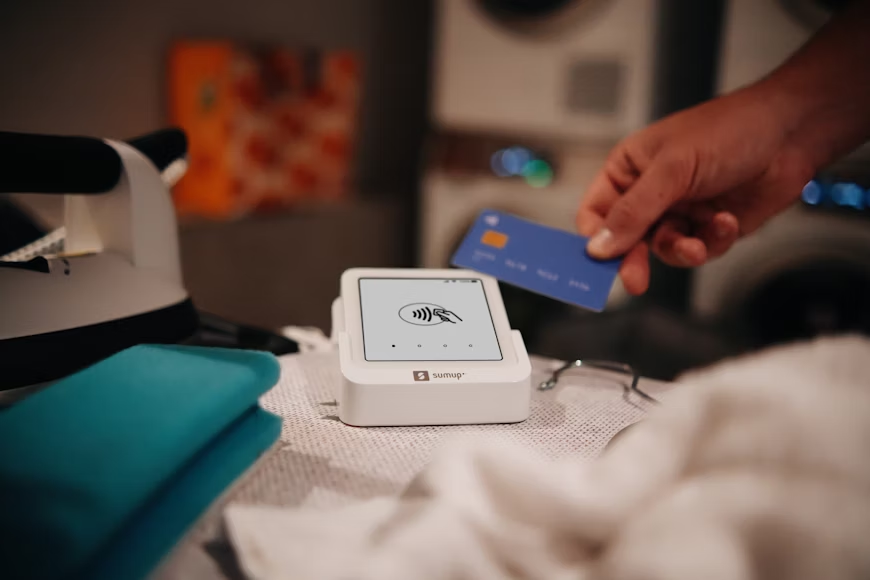
In practical terms, contactless has moved from a nice-to-have payment option to a normal part of everyday shopping. Customers are used to tapping a physical card, a phone or a watch. They expect the reader to respond quickly, the payment to go through smoothly, and the overall checkout journey to feel effortless.
That expectation is reinforced by the wider payments picture. UK Finance’s 2025 Payment Markets summary says that in 2024, cash fell to 9% of all UK payments, down from 12% in 2023, while contactless cards remained the most frequently used payment method in the UK.
This does not mean cash has disappeared, and retailers should not assume every customer wants the same payment method. But it does mean that for a growing share of day-to-day transactions, especially in smaller-basket environments, contactless is setting the pace of the checkout experience.
Why contactless matters so much to retailers
The biggest effect of contactless is speed.
When payment becomes quicker, the bottlenecks at checkout become more visible. If customers can tap in seconds but still spend too long waiting because of poor terminal placement, awkward bagging flow, slow scanning or clunky till processes, the payment technology alone will not solve the problem.
That is why contactless matters to retailers beyond payments. It affects:
- queue pressure
- checkout design
- how quickly staff can serve
- how smoothly customers move through the shop
- whether self-service works well in practice
- how the business balances cash, card and mobile payments
For convenience stores and other fast-moving retail environments, this is especially important. Many transactions are low-value, high-frequency and time-sensitive. A payment method that reduces friction even slightly can improve flow across the whole store.
Contactless is not only about cards anymore
Retailers should also stop thinking about contactless purely in terms of plastic cards.
A growing share of contactless behaviour is now tied to mobile wallets and wearable devices. UK Finance says half of the UK population uses mobile contactless payments at least once a month, which means phones and watches are now part of the mainstream payment mix rather than a niche behaviour.
That matters because mobile-wallet users often expect a very fast experience. They are used to quick authentication, quick terminal response and a smooth exit from the checkout area. If the payment hardware or checkout flow feels slow, that contrast becomes more obvious.
For retailers, the takeaway is simple: a contactless-ready setup should be ready for cards, phones and watches, not just one of those options.
What contactless growth means for checkout design
As contactless becomes more dominant, checkout design matters more.
A shop can support contactless technically but still deliver a poor experience if the customer has to stretch awkwardly to reach the reader, wait for unclear prompts, or pause because the flow between scanning and payment is clumsy.
Retailers should think about:
Terminal placement
The payment point needs to be clear and easy to reach. Customers should not be searching for where to tap.
Counter flow
The sequence from scanning to payment to receipt should feel natural and quick.
Queue movement
If payment is fast, the queue should move fast too. If it does not, the issue may lie elsewhere in the checkout design.
Staff efficiency
Team members should be able to guide or assist without creating extra friction.
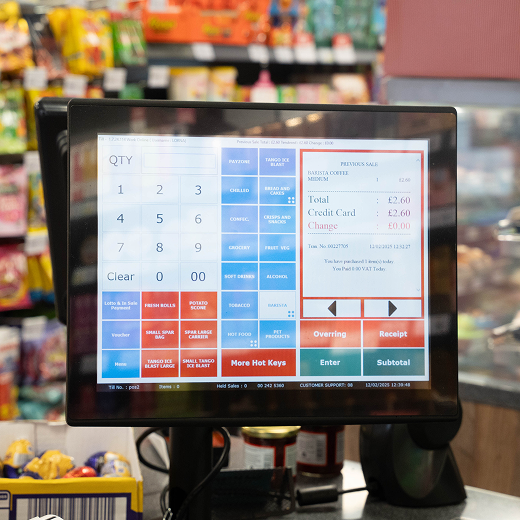
This is one reason modern POS and EPOS decisions matter so much. Contactless works best when the whole checkout journey is built around speed, not when a fast payment method is bolted onto a slow retail process.
Contactless and queue reduction
One of the clearest retailer benefits of contactless is shorter transaction time. But it is important to be realistic about what that means.
Contactless can reduce queue pressure, but only if the rest of the checkout experience is efficient as well. If staff are still dealing with slow item lookup, manual overrides, poor scanner performance or awkward customer flow, queues can still build quickly.
This is where a broader retail technology view matters. MHouse’s own content repeatedly links faster payments with reduced queue times and smoother flow. Its self-service page says MPOS Self-Service Kiosks let customers scan, pay and complete purchases independently, reducing queues and improving satisfaction. MHouse also says its kiosks are built to support contactless payments and a seamless flow during peak hours.
So the real lesson is that contactless helps reduce queues most when it is part of a faster overall checkout setup.
Which retailers benefit most from contactless?
Almost every retailer benefits from accepting contactless properly, but some benefit more than others.
Convenience stores
Convenience stores often rely on quick visits, smaller baskets and repeat purchases. Contactless is a strong fit because speed matters so much.
Food-to-go and quick-service retail
Where customers want to pay and move quickly, contactless can support a smoother transaction journey.
Independent high street retailers
Even where basket sizes vary, customers increasingly expect simple card and mobile-wallet payments as standard.
Self-service environments
Self-checkout and kiosk-led retail work especially well with contactless because it removes friction from the independent checkout journey.
This is why contactless is not only a payments topic. It is also a checkout-experience topic.
What retailers should expect from customers in 2026
In 2026, retailers should expect customers to be less tolerant of avoidable payment friction.
That means:
- they expect contactless to work first time
- they expect card readers to be responsive
- they expect mobile wallets to be accepted smoothly
- they expect the payment part of checkout to be one of the fastest parts, not the slowest
- they increasingly expect self-service points to support the same behaviour
Retailers should also expect that “fast enough” is becoming a moving target. As customers become more used to tap-and-go payments, small delays feel more noticeable.
So the operational challenge is no longer just accepting contactless. It is delivering a checkout experience that feels consistent with how customers already pay.
Contactless and the wider payment mix
Contactless growth also changes how retailers think about payment mix.
A shop may still accept cash, and in many areas it should. UK Finance’s 2024 Payment Markets summary made clear that the UK is not a cashless society and that cash remained the second most frequently used payment method at that point, even as usage declined.
But the newer 2025 Payment Markets summary shows that cash’s share fell further in 2024 and that contactless cards remained the most frequently used payment method in the UK.
For retailers, that means checkout planning should reflect the actual mix of how customers pay now, not how they paid a few years ago. Even if cash remains relevant, the primary checkout journey in many stores is increasingly card- and wallet-led.
What retailers should look for in contactless-ready POS and EPOS
A good contactless setup is not just about owning a compatible card reader.
Retailers should look for:
Fast, reliable payment response
Customers expect tap-to-pay to be quick.
Support for cards and mobile wallets
Phones and watches should feel just as natural as cards.
EPOS integration
Payments should connect cleanly to sales reporting, stock visibility and reconciliation.
Stable connectivity
A slow or unreliable connection can undermine the whole experience.
Payment reporting
Retailers should be able to see tender mix and payment-type trends clearly.
Self-service compatibility
If the store uses or plans to use kiosks, contactless should fit naturally into that journey.
This is where integrated retail technology becomes more valuable than disconnected hardware. If the payment experience works smoothly with the wider checkout and back-office environment, the benefits are much easier to realise in practice.
Contactless and self-checkout
Self-checkout is one of the clearest examples of where contactless payments are shaping retail operations.
For small-basket, high-speed retail, contactless is often the most natural payment method for self-service. It reduces friction, supports faster independent checkout and keeps the experience simple for the customer.
MHouse’s self-service positioning reflects exactly this. The company says MPOS Self-Service Kiosks support independent checkout, contactless payments, loyalty integration and reduced queue pressure. It also says the kiosks are built to make checkout effortless and improve customer satisfaction.
That makes contactless especially relevant for retailers thinking about future checkout models, not just current card-reader needs.
Is contactless replacing cash completely?
No. Retailers should avoid overcorrecting.
Even though contactless is dominant in many day-to-day retail situations, some customers still prefer or rely on cash. UK Finance’s payments reporting makes clear that cash is still used in the UK, even as its share continues to fall.
So the sensible retailer view is not “cash or contactless”. It is “what payment mix best reflects how my customers actually want to pay?”
For many businesses, the answer will be to continue accepting cash while designing the checkout journey much more around contactless speed and convenience.
Risks and challenges retailers should keep in mind
Contactless offers clear benefits, but it is not without considerations.
Retailers should watch for:
Connectivity and terminal reliability
Fast payment expectations make downtime more visible.
Poor checkout design
A fast payment method does not fix a clumsy store layout.
Security and verification rules
Although contactless is convenient, customers may still be asked for PIN verification in some cases depending on cumulative spend and issuer controls. UK Finance noted this when the £100 contactless rollout began.
Assuming payments alone solve queue issues
Queues are often shaped by the full checkout process, not just the payment step.
The important point is that contactless should be treated as part of a wider operational design, not as a standalone fix.
How MHouse fits into the contactless shift
For MHouse, this topic is a natural content fit.
The business already positions itself around faster retail flow, self-service, modern EPOS and smoother customer journeys. Its MPOS Self-Service Kiosks page explicitly highlights contactless payments, independent checkout, reduced queues and improved customer satisfaction. MHouse’s blog also links better POS systems and self-service kiosks to faster transactions and lower wait times during busy retail periods.
That means a retailer reading about contactless expectations in 2026 is already close to the kinds of problems MHouse is trying to solve: speed, queue management, payment flow and connected checkout technology.
Final thoughts
Contactless payments are not just changing how customers pay. They are changing what customers expect from the whole checkout journey.
In 2026, UK retailers should expect contactless to remain central to everyday trading. The latest UK Finance figures show that contactless continues to dominate both transaction share and value, while mobile-wallet use keeps reinforcing the wider shift toward low-friction payments.
For retailers, the practical implication is clear. Payment speed, queue design, terminal placement, self-service compatibility and EPOS integration all matter more in a contactless-led environment.
The businesses that adapt best will not simply “accept contactless”. They will build checkout experiences around it.
FAQs
How common are contactless payments in the UK?
Very common. UK Finance said that in January 2025, contactless accounted for 64% of all credit card transactions and 75% of all debit card transactions, with 1.43 billion contactless transactions worth £22.6 billion that month.
Are mobile wallet payments growing in the UK?
Yes. UK Finance says half of the UK population now uses mobile contactless payments at least once a month.
Do retailers still need to accept cash?
Often yes, depending on the customer base. Cash is still used in the UK, even though its share of total payments has fallen sharply.
How do contactless payments help reduce queues?
They speed up the payment step, which can improve throughput at the till. The biggest benefit comes when fast payments are combined with efficient checkout design and EPOS flow.
What should retailers look for in a contactless-ready EPOS system?
They should look for fast terminal response, support for cards and mobile wallets, strong EPOS integration, stable connectivity, payment reporting and compatibility with self-service if relevant.
Is contactless important for self-checkout?
Yes. It is often one of the most natural payment methods for self-service because it keeps the checkout journey quick and low-friction. MHouse positions contactless support as part of its MPOS Self-Service experience.